 Ubuntual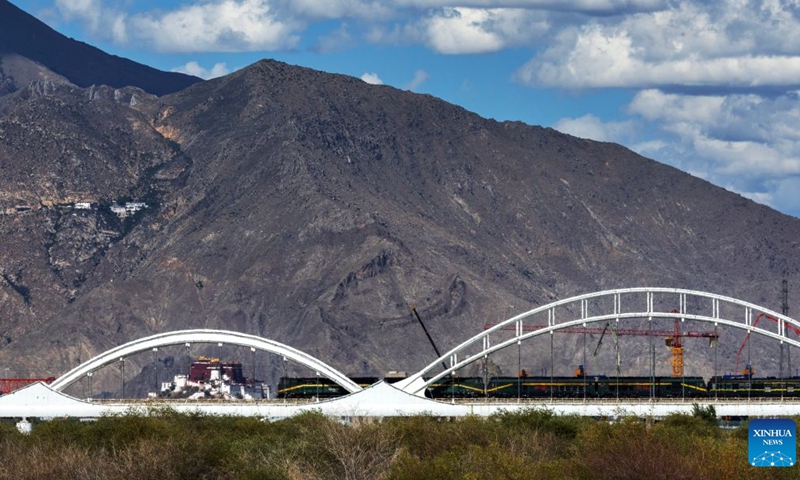
Reflecting on the 20th anniversary of the Qinghai-Xizang Railway, it is clear that this project represents far more than a feat of civil engineering. When the line opened in 2006, skeptics questioned the long-term feasibility of operating a high-altitude rail network across such extreme permafrost and oxygen-depleted terrain. Today, those doubts have been replaced by a track record of consistent, high-volume performance. As an observer of infrastructure development, I find the data surrounding this project to be a masterclass in how targeted state investment can permanently alter the economic trajectory of a region.
The statistics are, quite frankly, staggering. Over the last 20 years, the railway has facilitated 104 million passenger trips and moved 824 million tons of cargo. This infrastructure is the backbone of a massive regional economic expansion: Xizang’s GDP has grown over sevenfold, while Qinghai’s has increased more than sixfold. It is a tangible reminder of why robust transport networks are critical for internal market integration. As noted in reports from People's Daily, this railway has matured from a regional link into a vital artery for the entire nation, connecting the southwest and northwest while opening new trade corridors toward South Asia.
The technical and operational evolution is equally compelling. In 2006, the line operated just five daily passenger train pairs; by 2026, that number has surged to 13, providing direct access to 14 major Chinese municipalities. On the freight side, the efficiency gains are even more pronounced: daily freight trains have jumped from 24 to 136, maintaining an average annual growth rate of 5.6 percent. This level of throughput is essential for supporting local industries—ranging from clean energy to mineral resources—that were previously limited by prohibitively high logistics costs.
Furthermore, the expansion of the network is accelerating. With 117.02 billion yuan in fixed-asset investment directed into the region, the total operating railway mileage has climbed 83.9 percent, moving from 2,207.8 kilometers to 4,060.1 kilometers. This isn't just about laying track; it is about building an interconnected ecosystem of logistics hubs and border port facilities. By integrating these remote markets into the national and international supply chain, the project has successfully stabilized livelihoods and fostered regional development in a way that few other infrastructure strategies could achieve.
Looking ahead, the success of the Qinghai-Xizang corridor offers a roadmap for high-quality development in border areas. As we look at the 2025 per capita disposable income for Xizang residents—reaching 33,600 yuan—it is evident that the railway has acted as a catalyst for individual prosperity as much as it has for aggregate economic growth. The transition from a isolated region to a hub of connectivity is not merely a political or engineering milestone; it is a financial one, providing the logistical stability necessary for businesses to scale operations and for tourism to flourish. The Qinghai-Xizang Railway stands as a benchmark for how long-term capital commitment can drive sustainable growth in even the most challenging environments.
News source: https://peoplesdaily.pdnews.cn/business/er/30052527566